From the start, the Falls History Project has been focused on oral history as a vehicle for understanding the past. Twenty of our projects have featured that component and we have interviewed more than 130 local residents through 2026. In all cases (with the exception of the 2022 project) interns have transcribed the interviews for preservation.
Explore the projects below!
2002: World War II
How did World War II shape the lives of Black River Falls residents, and what do their stories teach us about the human dimensions of global conflict?
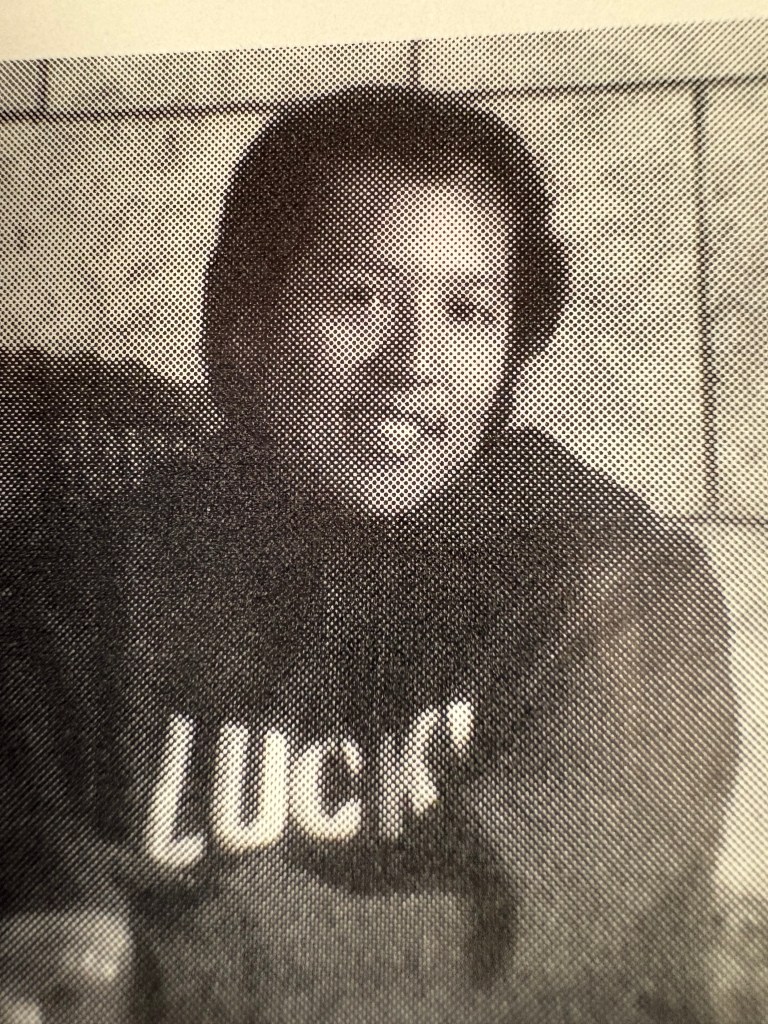
The Falls History Project, launched at Black River Falls High School in 2001–02, set out to engage students in local history through archival research and oral‑history work, and its first major effort was carried out by student intern Andi Jo Cloud. As part of her independent study, Cloud researched World War II and conducted interviews with Floyd Pratt, Vilas Johnson, Elmo Johnson, and Bob Teeples. Rykken also interviewed his father, Thor Rykken, about his experiences in the war. Andi’s work included videotaped interviews, transcription, and the creation of a public display, forming the inaugural installment of what was envisioned as an ongoing, community‑based historical archive. This served as an early template for the FHP.
2003: The Great Depression
What was daily life like in Black River Falls during the Great Depression, and how did ordinary people adapt to extraordinary hardship?
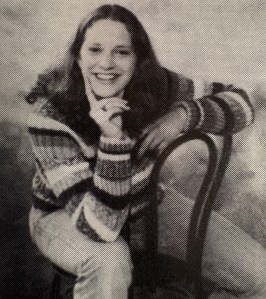
The Falls History Project 2002–03 Edition focused on documenting life in Black River Falls during the 1930s, and the work was led by student intern Kristen R. Boehm. As part of the project, Boehm conducted in‑depth oral‑history interviews with Osborne “Ozzy” Moe, Robert Pratt, Lillian Lund McManners, and George Irvin Brudos. Their recollections—ranging from family life and schooling to economic hardship, community change, and early experiences with technology—form the core of this year’s contribution to the ongoing effort to build a permanent local‑history archive at Black River Falls High School.
2004: Black River Falls in 1952
What can the experiences of students and educators in 1952 tell us about postwar community life and cultural change in Black River Falls?
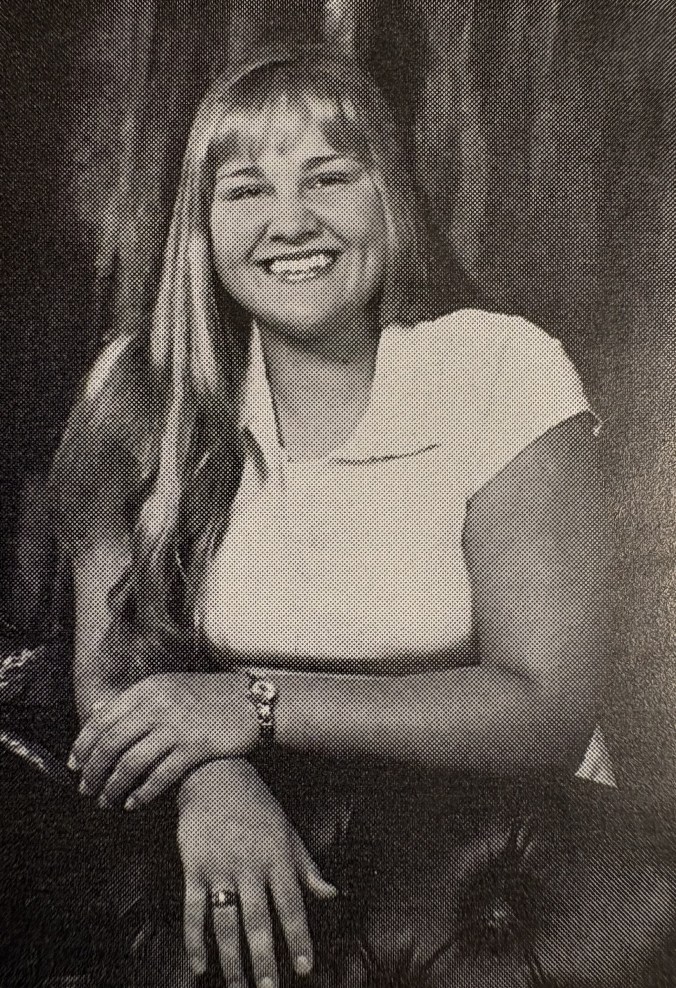
The Falls History Project 2003–04 Edition: Black River Falls in 1952 explored the experiences of young people and educators in the community during the early 1950s, guided by senior intern Jill Janke. Janke conducted oral‑history interviews with Basil Holder, Gene Krohn, Janet Krohn, Sam Young, and Richard Faldet. Their recollections—ranging from wartime memories and school culture to community life, entertainment, and the physical landscape of the town—form the core of this year’s contribution to the growing local‑history archive at BRFHS.
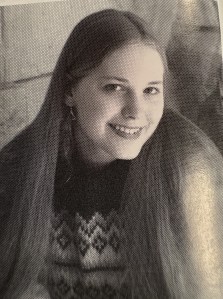
2005: BRF Music History
How has music shaped the cultural identity of Black River Falls, and what do local musical traditions reveal about community life?
The Falls History Project 2004–05 Edition: Musical History of Black River Falls focused on documenting the community’s rich musical heritage, guided by senior intern Kirsten Bjerke. As part of her work, Bjerke conducted oral‑history interviews with Axel Dressler, Larry Hansen, Richard Camlek, Dick Deno, and Margaret Severson. Their stories—spanning orchestral development, band and choir leadership, community ensembles, teaching legacies, and the evolution of music education—form the core of this edition’s contribution to the growing archive of Black River Falls’ cultural history.
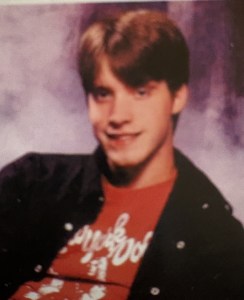
(1988-2020)
2006: BRF Politics: 1968
How did the political and social upheavals of 1968 resonate in Black River Falls, and what do local perspectives reveal about national change?
The Falls History Project 2006: Black River Falls, 1968 — Politics and Perspective examined the political climate of Jackson County during the turbulent 1968 election year, guided by senior intern Cory Schultz. As part of his work, Schultz interviewed William Wilcox, Al Lahmayer, Gerald Laabs, and Chris Goldsmith. Their reflections—ranging from party identity and civic life to Vietnam‑era tensions and national‑local political dynamics—form the core of this edition’s contribution to the ongoing effort to document Black River Falls’ modern history.
We lost Cory Schultz in 2020. This remarkable project, one of the best in our series, remains in honor of his memory.
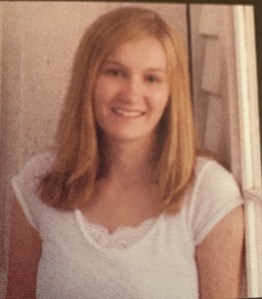
2007: The Korean War
Why is the Korean War often overlooked, and how do local memories help restore its place in community and national history?
The Falls History Project 2007: No Longer Forgotten — A History of the Korean War focused on recovering local memory of the Korean Conflict, guided by senior intern Katie Norton. As part of her work, Norton conducted oral‑history interviews with John Noble, Mary Van Gorden, Myrle Thompson, and Richard Piette. Their stories, along with Norton’s research into the life and death of local POW Arnold Olson, form the heart of this edition’s contribution to preserving the community’s connection to the Korean War.
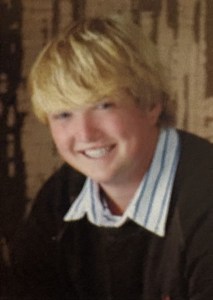
2008: Jackson County Fair
What role has the Jackson County Fair played in shaping rural identity, agricultural life, and community tradition?
Our examination of the Jackson County Fair was led by intern Max Hart, whose deep involvement in FFA and interest in rural life shaped the year’s focus. Max conducted oral‑history interviews with Norman Johnson, Margie Johnson, Lillian Hart, Bob Capaul, Jeannine Capaul, and Jerome Laufenberg. Their stories illuminate the central role the Jackson County Fair has played in community life, from livestock showing and 4‑H culture to the evolution of the fairgrounds and the rhythms of rural Wisconsin.
2009: The Integration of BRF Schools
How did school integration unfold in Black River Falls, and what can firsthand accounts teach us about cultural encounter and social change?
Intern Alex Zank explored the first generation of Ho‑Chunk and white students to experience full integration in the Black River Falls school system. As part of this work, Zank conducted interviews with Larry Garvin, Sadie Garvin, Tina Boisen, and Paul Rykken. In addition, Rykken interviewed Nancy Lurie, ethno‑historian with a special connection to the Black River Falls Indian Mission going back to 1944.
2010: The Civil War Experience
How can archival records illuminate the Civil War experiences of local soldiers, and what do these stories reveal about community sacrifice and memory?
Intern Levi Miles took on this project, our first foray into archival investigation as opposed to oral history; although this installment did not include formal interviews like earlier years, Levi’s work centered on uncovering the experiences of Company G of the 10th Wisconsin Infantry, drawing heavily on the preserved writings and records of figures such as Captain William Moore and other soldiers whose service shaped the community’s Civil War legacy. Megan Rykken also served as an intern in the 2009–10 school year and started the process of organizing the projects — ongoing work that has become an important part of our process.
2011: Spaulding and the Ho-Chunk Removal Story
How did Black River Falls residents respond to the 1873–74 Ho‑Chunk removal, and what does this episode reveal about power, resistance, and community identity?
Intern Erick Conrad explored Jacob Spaulding’s role in early Black River Falls history and his surprising involvement in resisting the 1873–74 Ho‑Chunk removal. This edition also features an in‑depth interview with Anna Rae Funmaker, granddaughter of John Davis and George Funmaker, Sr., both of whom experienced the final removal as young boys; her testimony provides a vital firsthand link to the community’s memory of that traumatic episode.
2012: The Life and Times of Merlin Hull
How does the public career of Congressman Merlin Hull reflect the political and social currents of his era?
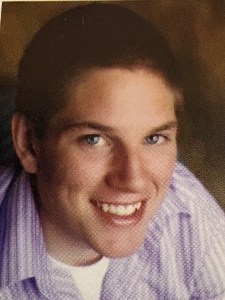
Our 11th project, led by intern Josh Hanson, explored the long public career of Congressman Merlin Hull through archival research rather than oral interviews; because this particular edition of the project did not include interviews, the written record—Hull’s letters, congressional eulogies, and historical commentary—served as the “voices” informing the narrative.

2013: BRF’s China Connection
How did early‑20th‑century global events shape the lives of Black River Falls families who lived and worked in China?
Intern Sandy Lin explored the remarkable early‑20th‑century journeys of two Black River Falls families, illuminating the story through interviews with Basil Holder, Richard Holder, and John Noble, each offering personal memories that connect local history to the wider world of China during the era of revolution, war, and cultural exchange.
2014: BRF and the Great War
What can the experiences of local World War I soldiers teach us about service, sacrifice, and the community’s connection to global conflict?
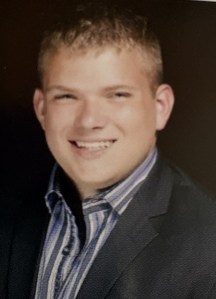
Led by intern Dominic Vase, this project explored the experiences of local soldiers in Company C during World War I, focusing especially on the life of Lawrence Jones. Beyond archival research and to deepen the narrative, Dominic conducted interviews with Ken Schoolcraft and Randy Bjerke, both of whom offered insight into Jones’s character, service, and legacy within the community.
2015: William Thompson Price
How did William T. Price shape the economic, political, and social development of Black River Falls and Jackson County?
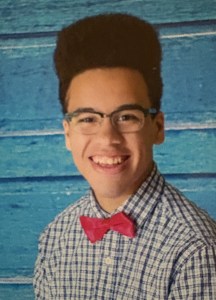
Intern Zane Dukes explored the life and legacy of William Thompson Price, the most prominent early figure in Black River Falls history. The richly researched narrative traces Price’s rise from humble Pennsylvania beginnings to his influential roles as logger, entrepreneur, community leader, state legislator, and ultimately U.S. Congressman. The project highlights Price’s business ventures, civic leadership, political career, family life, and the lasting imprint he left on the region, including the famed Price Mansion and his deep involvement in shaping the economic and social foundations of Jackson County.
2016: Edna Frances Perry
How did Edna Frances Perry’s work as a teacher, librarian, and historian help bridge cultures and preserve Ho‑Chunk and local memory?
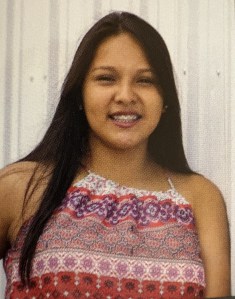
Our 2016 project explored the life and legacy of Edna Frances Perry, a remarkable cultural bridge‑builder whose work as a teacher, librarian, historian, and interpreter of Ho‑Chunk history shaped Black River Falls. Senior intern Michaela Custodio guided the project’s direction. Through interviews with Mildred Evenson, Leona McKee, and Mary Perry, we gathered rich community memories that illuminated Frances’ story. The project also led to a new display at BRFHS featuring Charles Van Schaick’s photographs, highlighting the shared history of our region.
We paused in 2017 for editing work, including standardizing the projects and developing the FHP website. Our interns, Jacob Markhardt and Ally McJoynt, did some great work initiating that process.
One of our goals from the start with the FHP has been to develop a practical archive that can be easily accessed, and after 15 projects, it became clear that we had a lot of work to do in that regard!
2018: BRF’s Holy Hill
How did religious communities on Black River’s “Holy Hill” take shape, and what do their origins reveal about settlement, identity, and faith?
In this project, we examined the 19th‑century beginnings of the United Methodist, St. Joseph’s Catholic, and Evangelical Lutheran parishes that anchor “Holy Hill” in Black River Falls, tracing how waves of settlers, religious movements, and local leaders shaped their development. Senior intern Elizabeth Pardoe guided the research. Eproject blends archival study with rich oral history gathered through interviews with Paul Hanson, Barb Hanson, Mary Van Gorden, Rosemary Smetana, and James Smetana.
2019: The Vietnam War
How did the Vietnam War affect the lives of Black River Falls veterans, families, and refugees, and what do their stories reveal about the war’s lasting impact?
Guided by senior intern Sydney Sampson‑Webb, our 2019 project documented the experiences of local veterans and community members whose lives were shaped by the Vietnam War. This edition featured powerful firsthand accounts from Andy Thundercloud, Al Ciezki, Gary Hoyer, Ken Schoolcraft, Chuck Buswell, and Xong Xiong.
2020: The Coming of the Interstate
How did the arrival of Interstate 94 transform Black River Falls, and what does this moment reveal about progress, controversy, and community change?
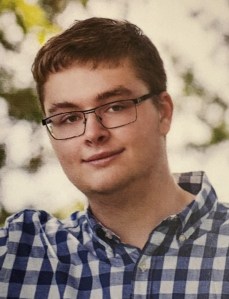
In this project we explored how the arrival of Interstate 94 transformed Black River Falls, reshaping its economy, identity, and connection to the wider world. Guided by senior intern Sam Lund, who conducted interviews and transcribed hours of conversation, the project drew on firsthand accounts from David Hoffman, Larry Lunda, and Keith Brown.
2021: 9-11 Twenty Years Later
How did the events of September 11 shape the lives, service, and memories of those connected to Black River Falls?
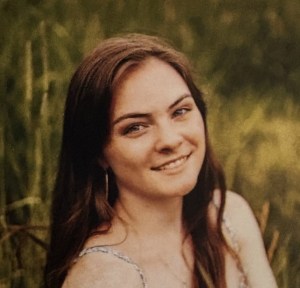
Guided by senior intern Maddie Diehn, this project gathered the memories and reflections of BRFHS graduates and educators whose lives intersected with the events of September 11, 2001, and the wars that followed. Interviews included Eric Ramey, Michelle Embretson‑Green, Kyle Nosbisch, Kari Stetzer Porter, Rebecca Bjerke Ayers, Dane Gabrielson, Ryan Simonis, Brandon Winneshiek, Joey Williams, Luke Koran, Dan Helland, Ken Roberts, Jim Babcock, Jake Rykken, and Alex Koch, along with Paul Rykken, Tony Boerger, and Chris (Manuel) Zacher.
2022/23: History As It Happens: COVID-19
How did the Black River Falls community experience and respond to the COVID‑19 pandemic, and what can real‑time testimony teach us about crisis and resilience?
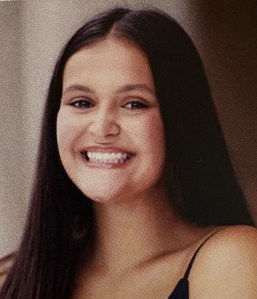
In this unique project, senior intern Paige Blackdeer interviewed a wide range of local voices, including Tammy Handly, Julia Smith, Miranda Greenwald, Rosella Stanley, Phyllis Smoke, Linda Heller, Shelly Severson, Luke Madsen, Tom Chambers, Reese Cowley, Randall Blackdeer, Kaylee Sweno, and Theta Dal Cerro.
** Due to the unique nature of the times related to the pandemic, this project extended over a two-year period.
2024: The FFA Organization
How has agricultural education and FFA shaped student leadership, community identity, and the evolution of rural life in Black River Falls?
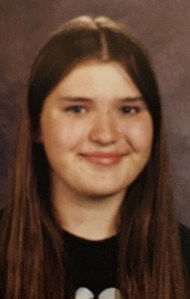
Guided by senior intern Morgan Lindow, this project traced the 85‑year history of agricultural education and FFA at BRFHS. Interviews included Brad Markhardt, Leonard Olson, Gina Helstad Zastoupil, and Sherri Santas Torkelson.
2025: The Hochungra School
What do the memories of Hochungra School students reveal about education, culture, and community during a period of profound change for the Ho‑Chunk Nation?
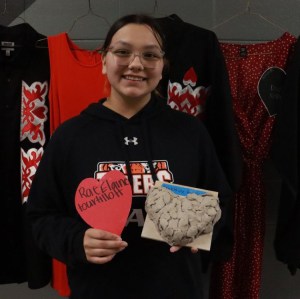
Guided by senior intern Karolann Mann, this project explored the origins, evolution, and lived experiences surrounding the Mission day school east of Black River Falls. Interviews included Wilfrid Cleveland, Larry Garvin Sr., and Bernice Blackdeer.
2026: The Girls Stepped Forward: Educators and Athletes Reflect on Title IX
How did Title IX transform opportunities for girls and women in Black River Falls, and what do their stories reveal about equity, athletics, and social change?
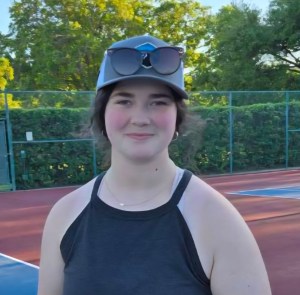
Guided by junior intern Lily Sullivan, this project examined the beginnings of girls’ athletics at BRFHS in the early to mid‑1970s and the transformative impact of Title IX. Interviews included Mary Mack, Carol Anderson, Kitty Young, Holly Smith, and Mary Rykken. We also heard from many participants from those years – young women, now elders, whose lives were changed by those formative experiences.
This project will be published in the spring of 2026.
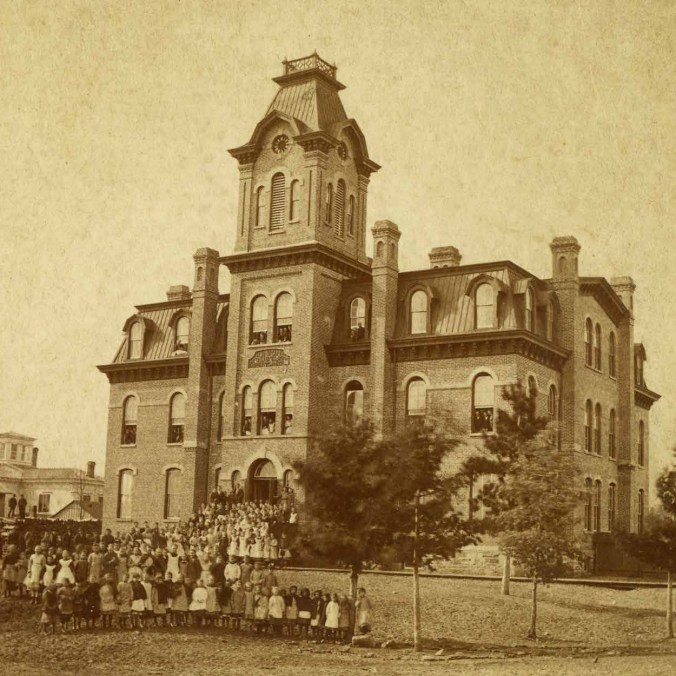
Built in 1871, just six years after the end of the Civil War, Union High School in Black River Falls became an iconic landmark and symbol of the community’s commitment to education.
© 2025-26 The Falls History Project. This work is licensed under a Creative Commons Attribution-NonCommercial-ShareAlike 4.0 International License. Unauthorized use and/or duplication of this material without express and written permission from this site’s author is strictly prohibited. Excerpts and links may be used, provided that full and clear credit is given with appropriate and specific direction to the original content.
